What are the I'm missing?
- Part 1 - How Cortisol affects Peri / Menopausal women
- Part 2 - The Key symptoms to look for
- Part 3 - What can I do to lower my Cortisol?
Part 1 – How Cortisol affects Peri / Menopausal women
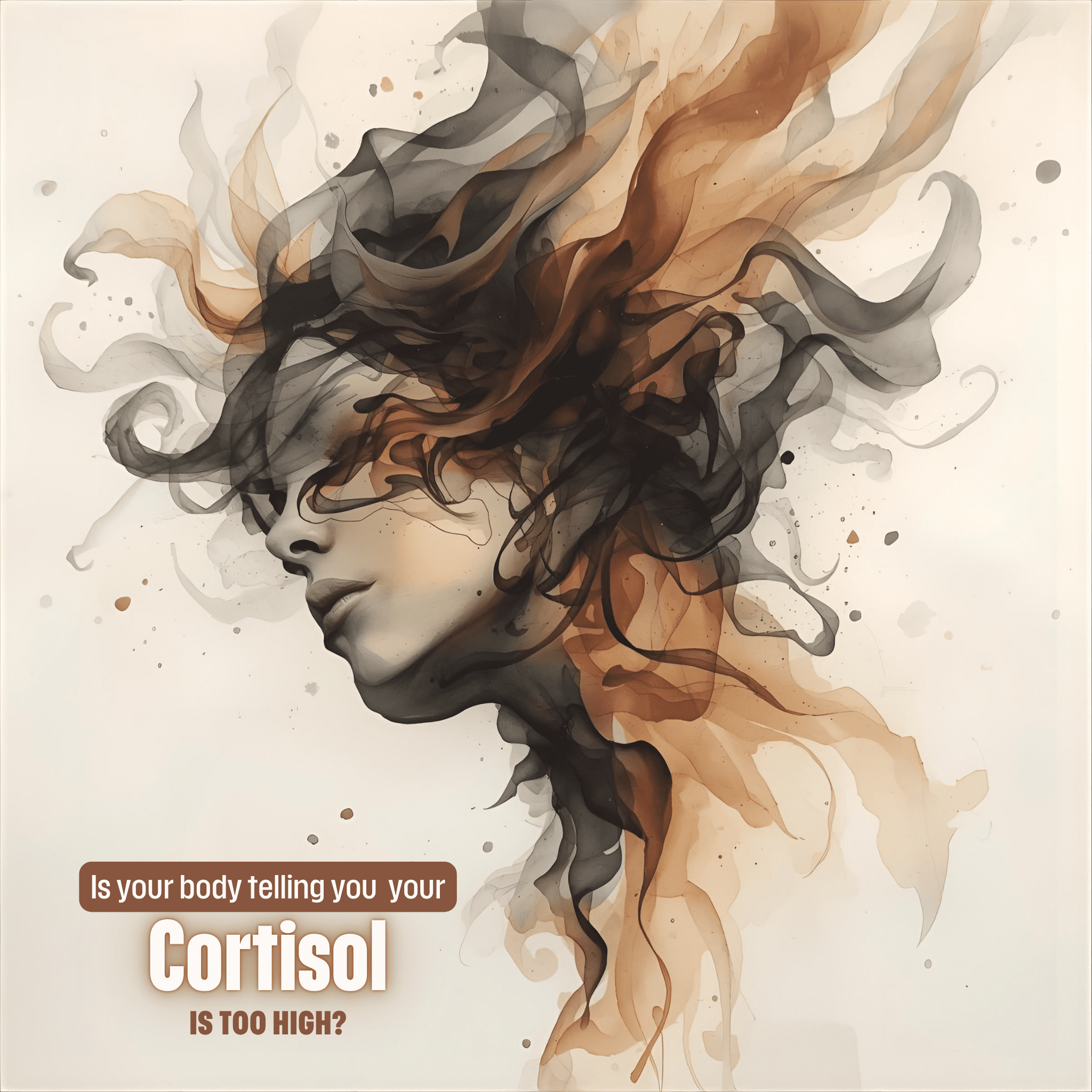
For women in perimenopause and menopause, cortisol plays a much bigger role than most people realise. Many of the symptoms women blame on hormones are actually cortisol driven or heavily influenced by cortisol being out of balance.
Cortisol itself isn’t the problem. Your adrenal glands produce it every day to keep you awake, focused and stable. It gives you the energy to function and keeps your brain sharp. But during the peri and menopausal years, your body becomes more sensitive to cortisol and less able to buffer stress. This makes elevated cortisol far more impactful on mood, sleep, energy and weight.
When cortisol stays high for too long, everything gets harder. Your sleep becomes lighter. Your mood sits closer to the edge. Your appetite changes. You carry more fat around the stomach even when nothing else in your routine has changed. Recovery slows down. And everyday stress hits you differently.

Part 2
Part 3
Research from the Cleveland Clinic links long term elevated cortisol to abdominal weight gain, sleep disruption, sugar regulation issues, low mood and impaired recovery. Healthline highlights the emotional shifts that come with persistent cortisol elevation, including increased irritability, anxiety and difficulty concentrating.
For women in peri and menopause, this hits harder because estrogen and progesterone naturally support the adrenal system. As these hormones fluctuate and decline, the adrenal glands and cortisol cycle take on more pressure.
This is why many women describe feeling flat, overwhelmed, inflamed, wired at night or exhausted in the morning. It is not imagined. It is not weakness. It is the physiology of a body that is changing and asking for a different kind of support.
When cortisol sits elevated week after week, your nervous system becomes stuck in a low grade stress state. Your body stops switching off properly. Recovery drops. And the systems that once held everything together start feeling unstable.
If you are in perimenopause or menopause and your body feels different than it used to, cortisol may be a bigger part of the picture than you think.